
OFFERING with Anna Greenstein
Minneapolis, Minnesota’s Anna Greenstein on Barter Hour and the community-building magic of trading together
This is JOIN 101’s fourth installment of “What are you doing alone that you could be doing together?” — a series highlighting civic innovators we’ve encountered on JOIN OR DIE’s community screening tour who have asked themselves this pivotal question…and put their answers into action.
This week, Anna Greenstein shares her journey of building Barter Hour, a Minneapolis-based event where neighbors get to know each other by swapping goods and services.
You can listen to Anna’s story above and find the full transcript and helpful resources below. If you or someone you know is ready to follow Anna’s example of gathering neighbors in creative new ways — share this story…and let us know what you create!
Onward to the next American joining revolution,
Rebecca Davis and Pete Davis
Rebecca: Today we meet Anna Greenstein, who was having a tough winter.
Anna: It was mid-winter in Minneapolis. It had been a year since I graduated college — a tough year where we’ve lost the institution of college to create community and have things to do. That’s a huge shock to people who just graduate. No one really warns them about it. I was like: Who do I hang out with? Who am I outside of work? I’m no longer Anna — Econ major, interested in dance, doing the fall dance concert, sociology minor, dabbles in this club. I’m just Anna, who lives in Minneapolis, working nine to five. And I was also noticing there was a lack of inspiration in my immediate community. We didn’t have the structure to really get together and do fun things.
Pete: So Anna decided she needed to build it herself.
Anna: Me and my good friend Sawyer got drinks one night at Little Tijuana’s. We were brainstorming ideas for things to do that we could host. We were tired of the typical party structure — you just come, have a drink, have some awkward conversations, maybe there’s a dance party. We needed something new, we need something fresh. And so we tried to brainstorm more interactive, engaging events. And we thought: What if people came and traded stuff? What if they just came and traded things with each other at our house?
Pete: And just like that, Barter Hour was born.
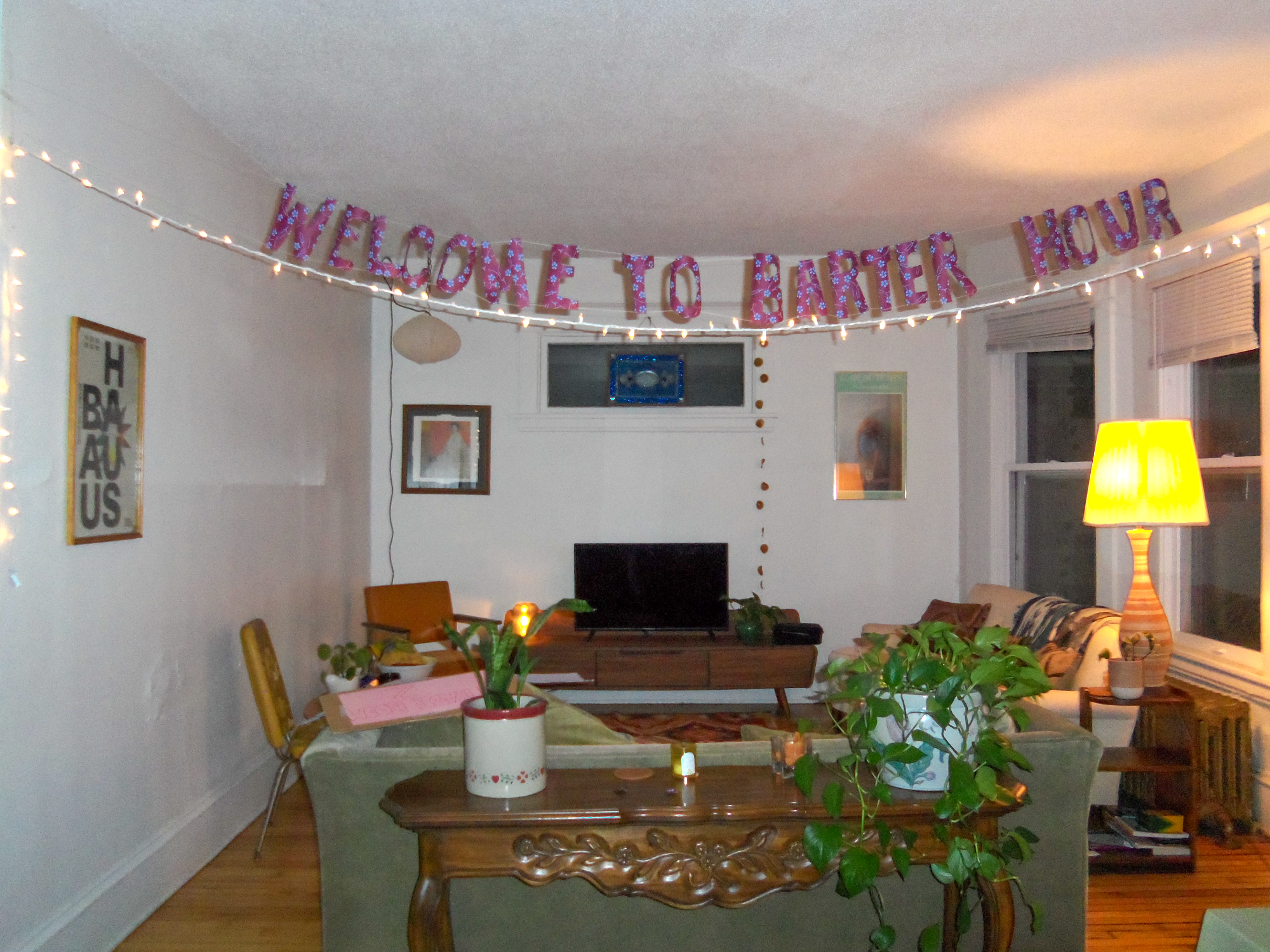
Anna: I hosted the first one in March of that year. I invited 40 people — everyone I knew. We wrote up a whole blurb of: What is Barter Hour. We made a whole thing: It wasn’t just, like, “come trade at our house.” It was: This is Barter Hour, a special event that you’re invited to. Come trade goods and services. We explained what those meant: goods are tangible things, things you’ve made or found in your house. Services are skills you have to share with people. I had Sawyer make a little Barter Hour logo — two hands shaking — to put as the image.
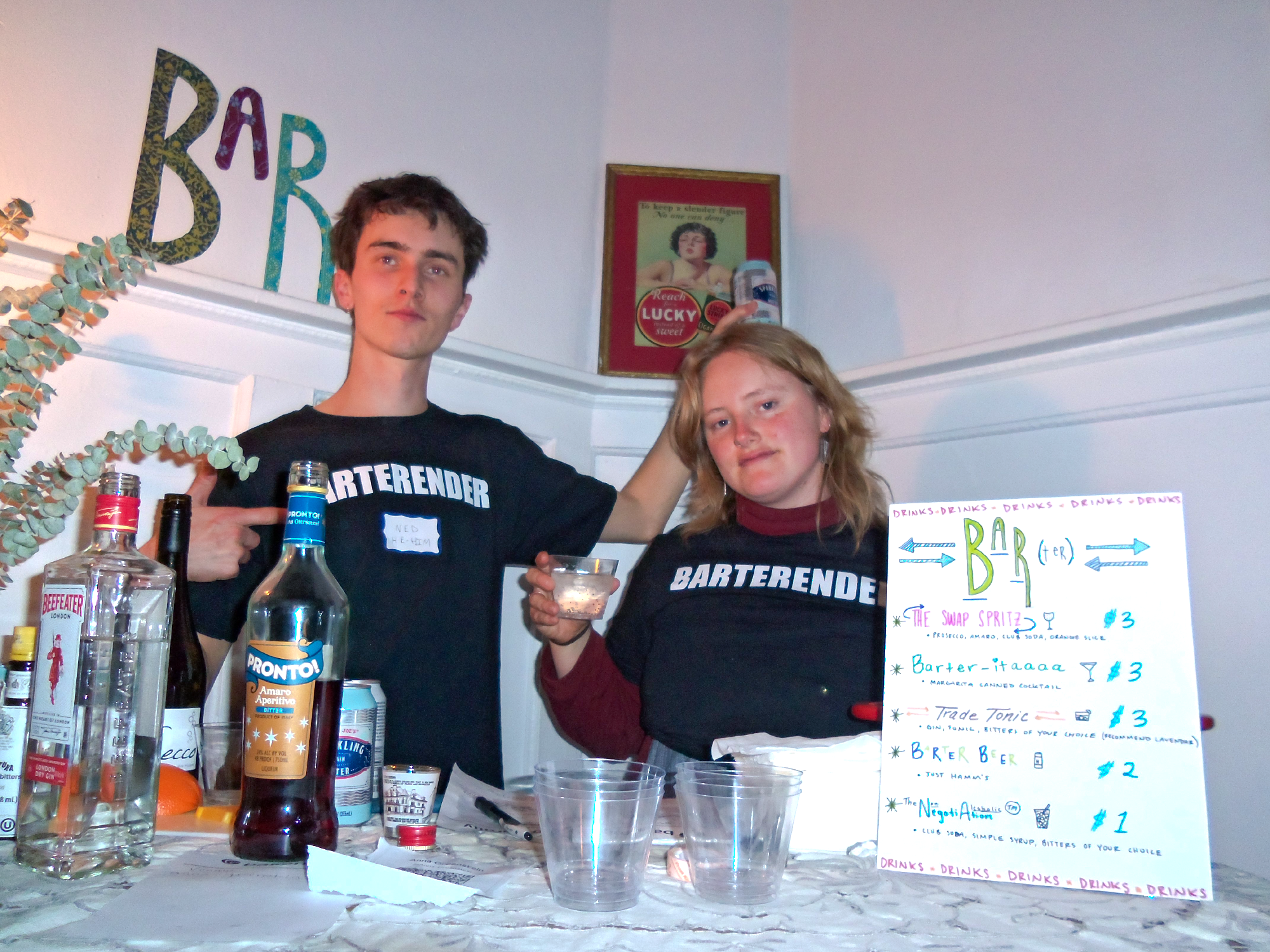
Thirty-five people came. It was a huge success. We had a bar, and Sawyer printed shirts that said Barter-enders — so instead of bartenders, we had barter-enders serving barter-themed drinks: the Swap Spritz, the Trade Tonic.
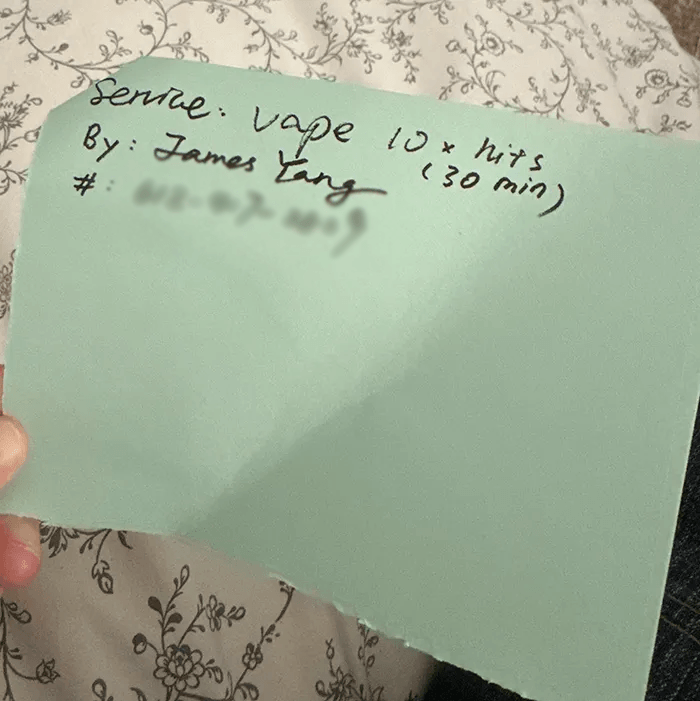
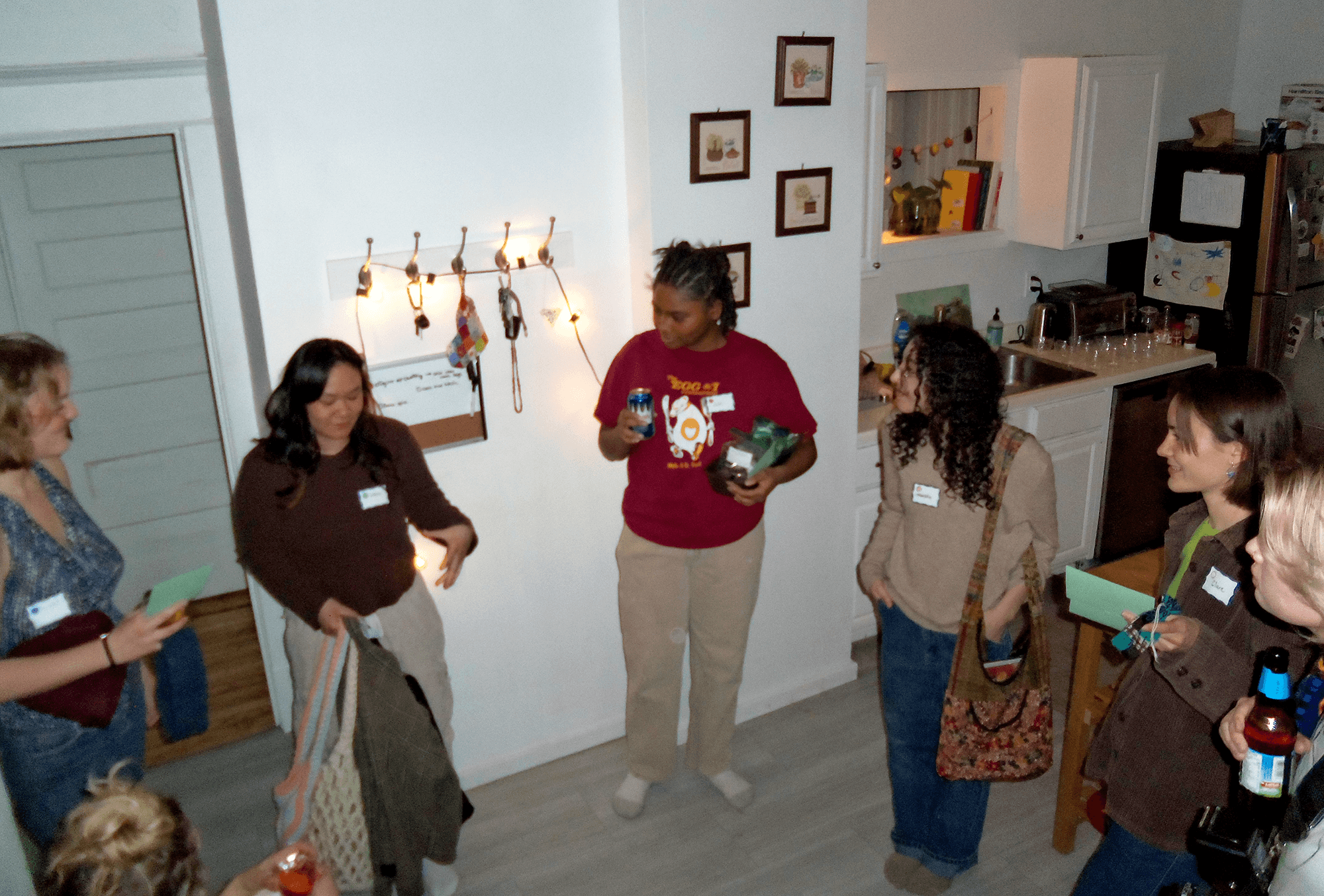
I made it an official event: I had an entry table where you’d write your name tag and fill out your service card — name of the service, a description, your name, and contact info. And I made a rule: Everyone had to have three things to offer.
Rebecca: But the gym’s greatest amenity? It’s other people.
David: One of the things that I’ve heard so many times is that there are people that I never, in a million years, would have met — all these people who are well beyond your social circle come together. You’re all just wearing gym shorts and t-shirts.
And then you have this shared suffering. So it’s this combination of suffering and laughter. If you can get those two things — suffering in a safe space, and then also laughter and community. You go through something with somebody else for that hour, and then automatically it’s a great equalizer. Because everybody in that room, regardless of their background: A pull-up is a pull-up.
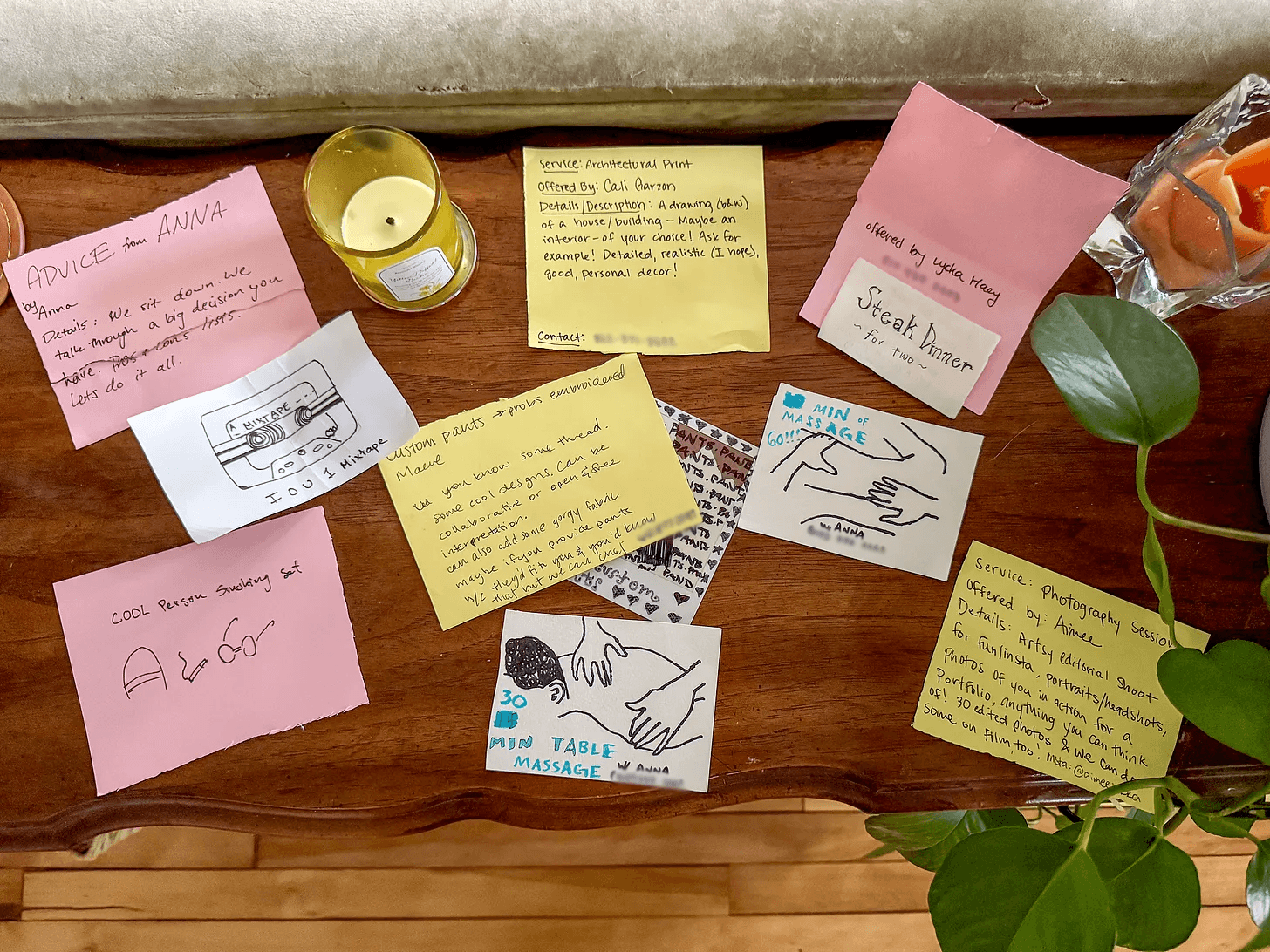
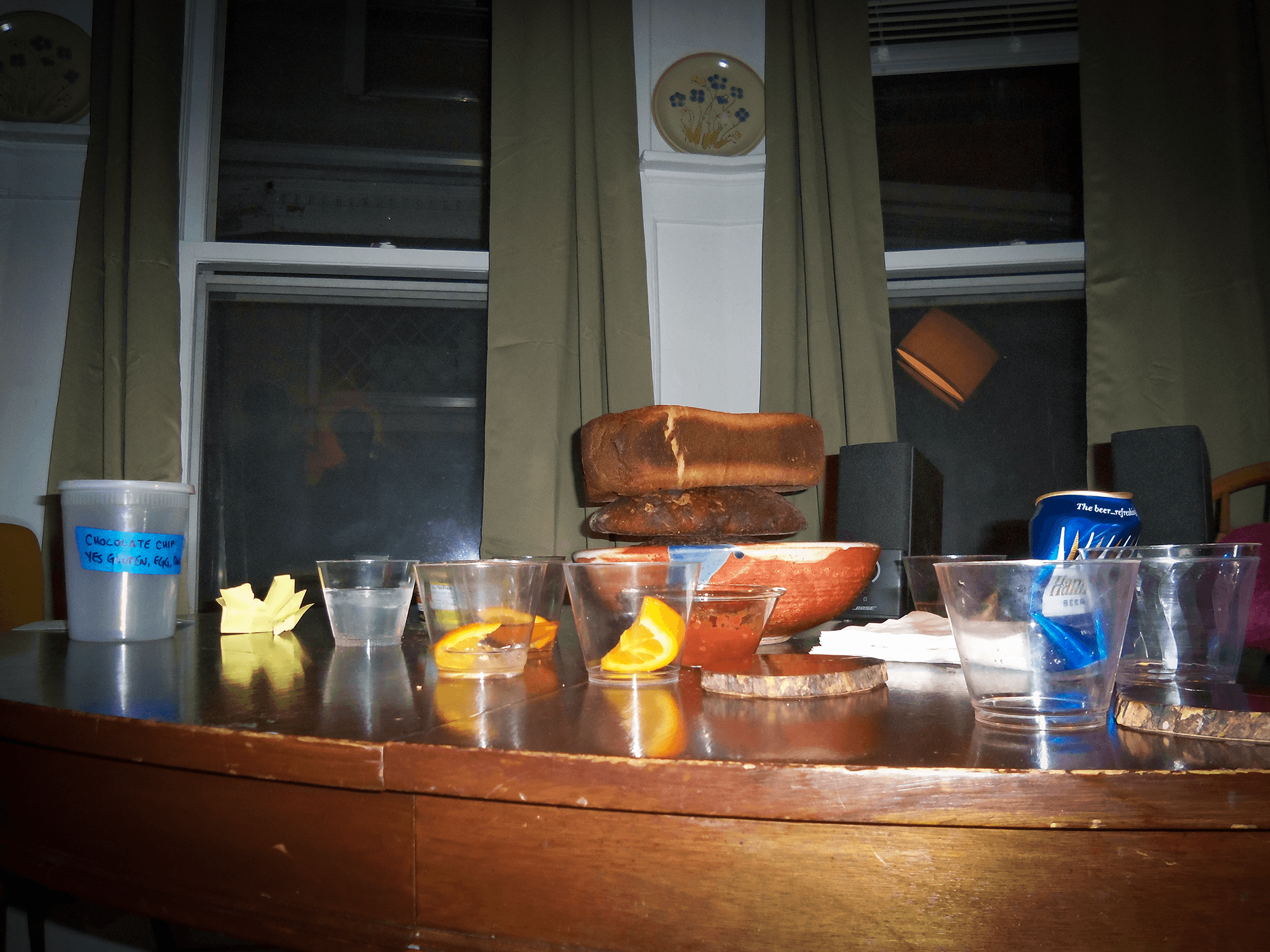
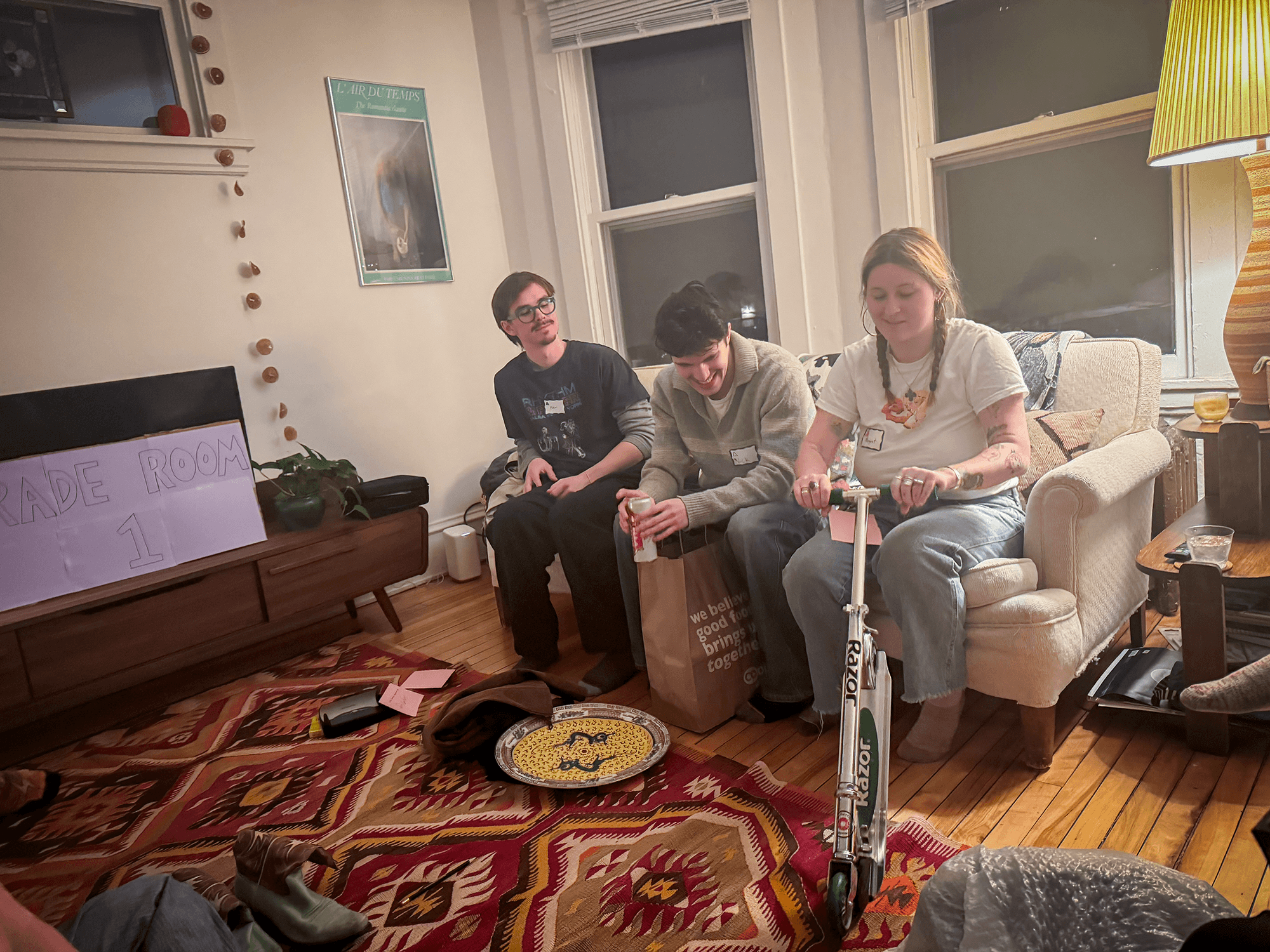
One person offered a photography session. One persons offered bike repairs. One person offered event planning help. Someone offered to cook you dinner at their house — they had a pizza oven and you could invite one person to come with you. Some of the goods were great too: a pair of ice skates, a crocheted sweater, a “cool smoker set” — a beanie, a pack of cigarettes, and some shades. It was really cute. People brought sourdough starter, someone just brought some cookies. Someone had a huge bag of bread — literally the biggest trash bag full of day-old bread. They worked at a bakery and had bread that didn’t get sold — it was probably like 15 loaves.
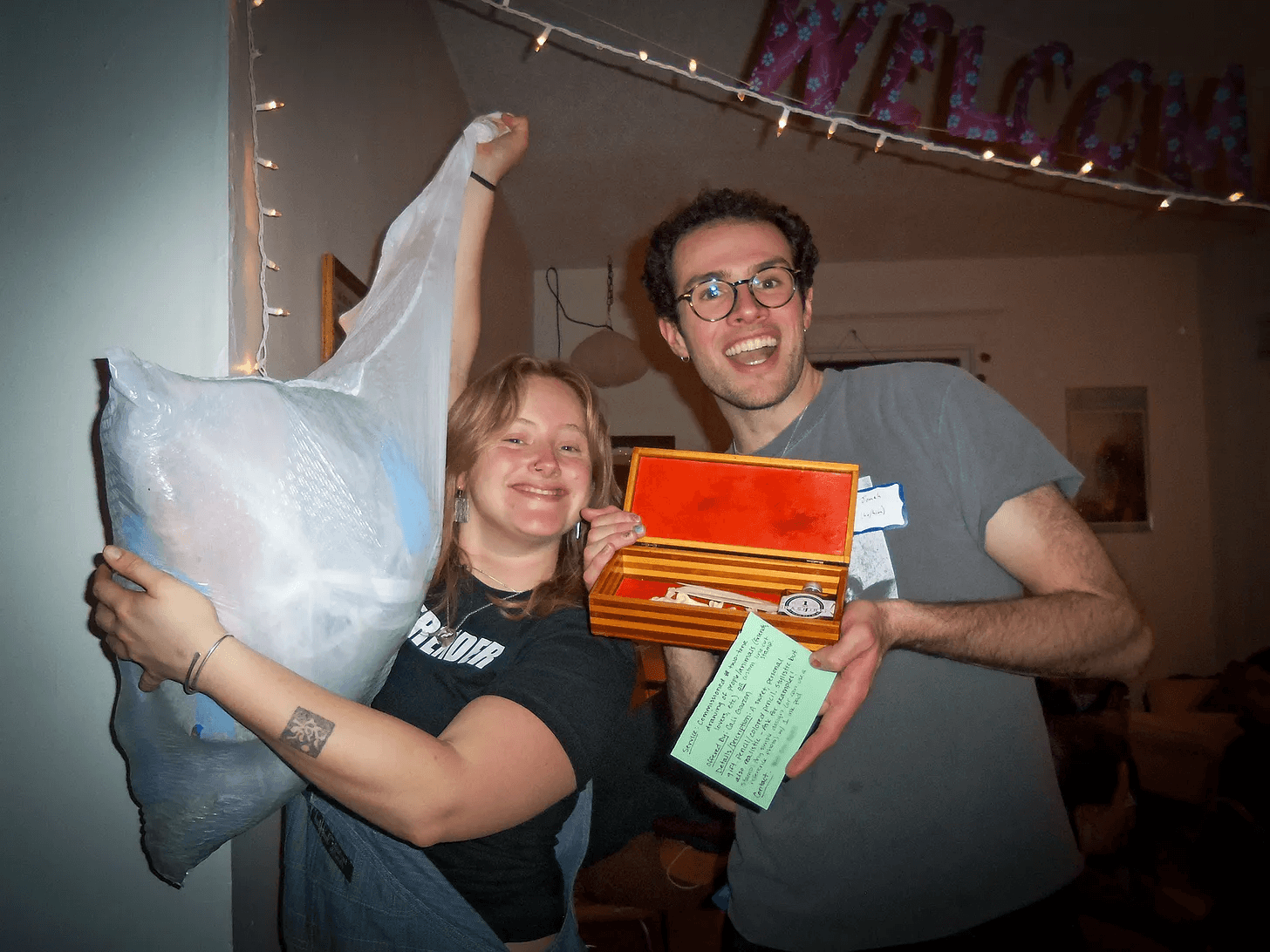
By the end of the night there were just loaves all around the house.
Someone even offered their vape for 30 minutes. (Someone took that and cashed that in right away.)
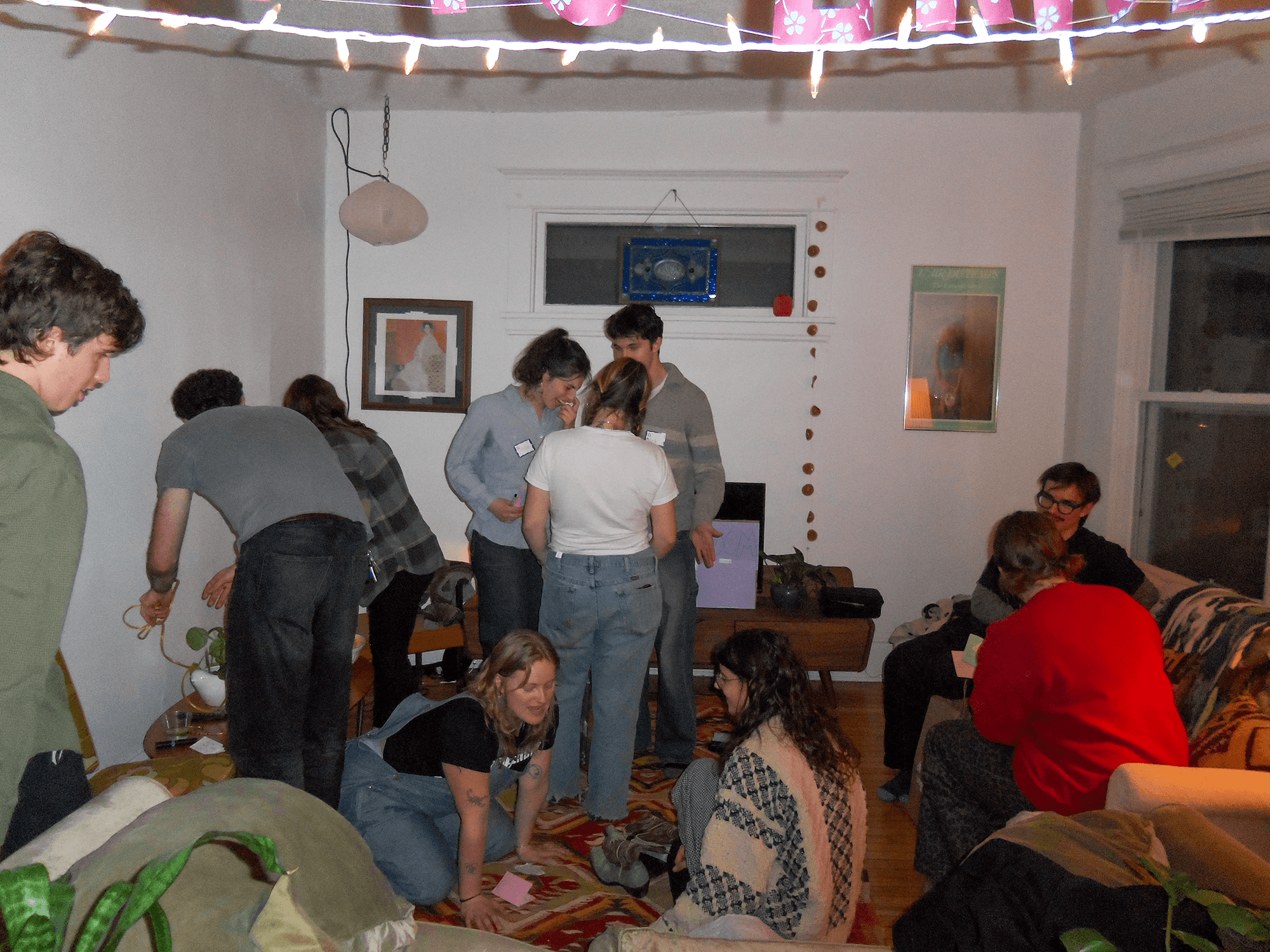
I split people up into trade rooms. I gave people little shapes and colors on their name tags to help sort them into groups. People had 30 minutes in each room to talk within their group, then we’d gather again and I’d say: “okay, next” — and people would split up into their rooms with new faces. At the end there was a free-for-all.
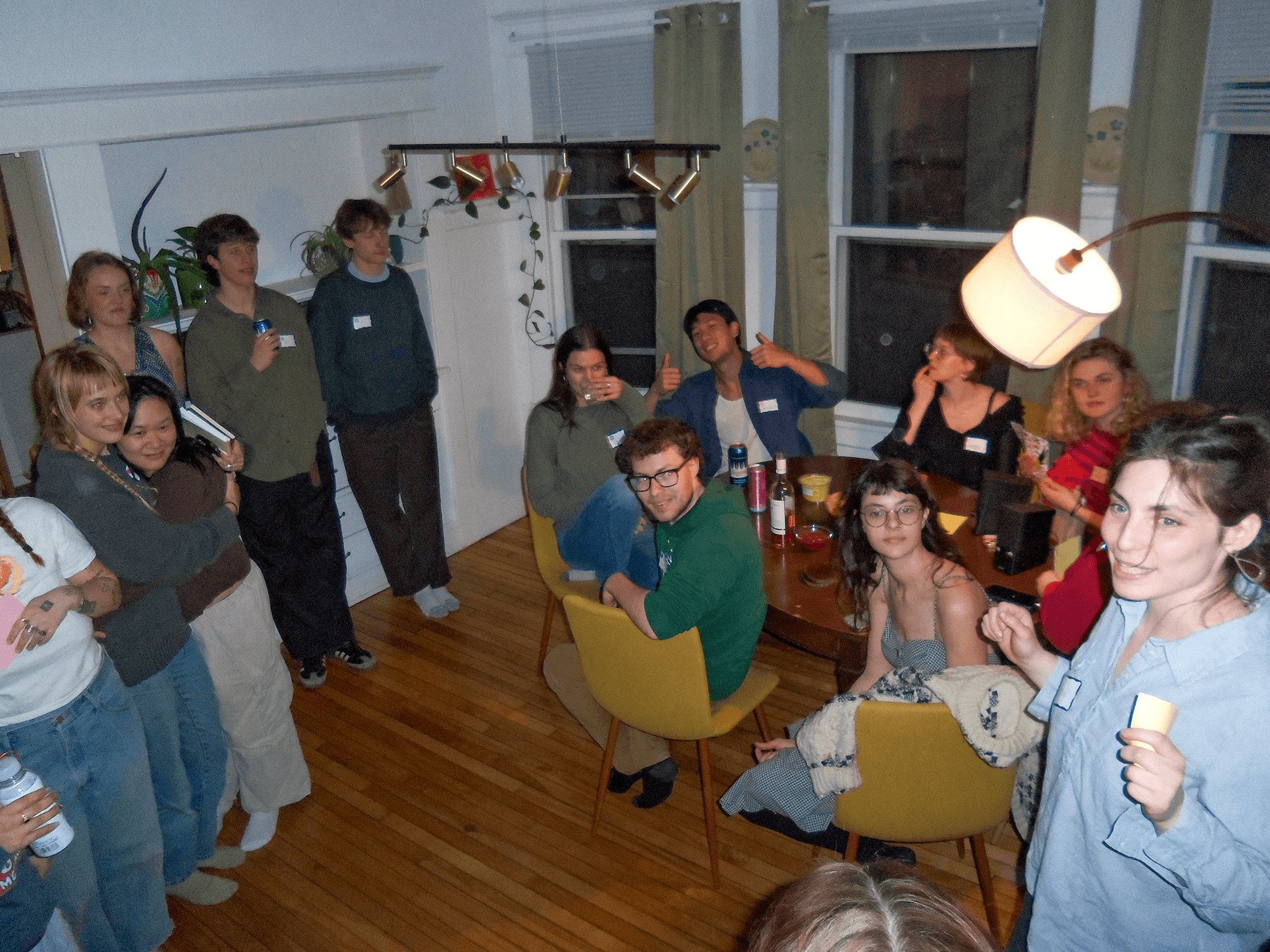
That added a gamified element, which was fun, because you had to decide: Do I trade now? Do I wait to see what else is out there? And the rule was you could only do a one-for-one trade.
Pete: But Barter Hour is about more than just the stuff.
Anna: What was so awesome about it is that it encouraged everyone to talk with each other. I have two roommates and they both brought friends from their circles, so there were people who didn’t know each other. And the bartering is just such a perfect way to get to know someone — you’re learning about what they’re passionate about, because they’re literally sharing a skill that they have or a thing that they made. You’re getting past the small talk right away. You’re getting into who they are.
I felt the electric energy in the house. People were drinking the fun drinks. At the end, people were coming up and they were like: This is totally what I needed. This was such a fun idea. When’s the next one?
And then I kept hosting, I had another one at my house, and my goal now is just to see what opportunities arise to collaborate with other people and put more of these on — but not forcing it; letting it grow naturally.
Rebecca: And the community building continues long after each Barter Hour is over.
Anna: I remember one pair — my friend Callie, she drew a very detailed sketch of someone else’s childhood home in exchange for a lamp. They sent me a picture of them together — they met up outside and sent me a picture of their trade. So people are meeting up outside and making new connections. Those people definitely didn’t know each other before. They came from different social circles.
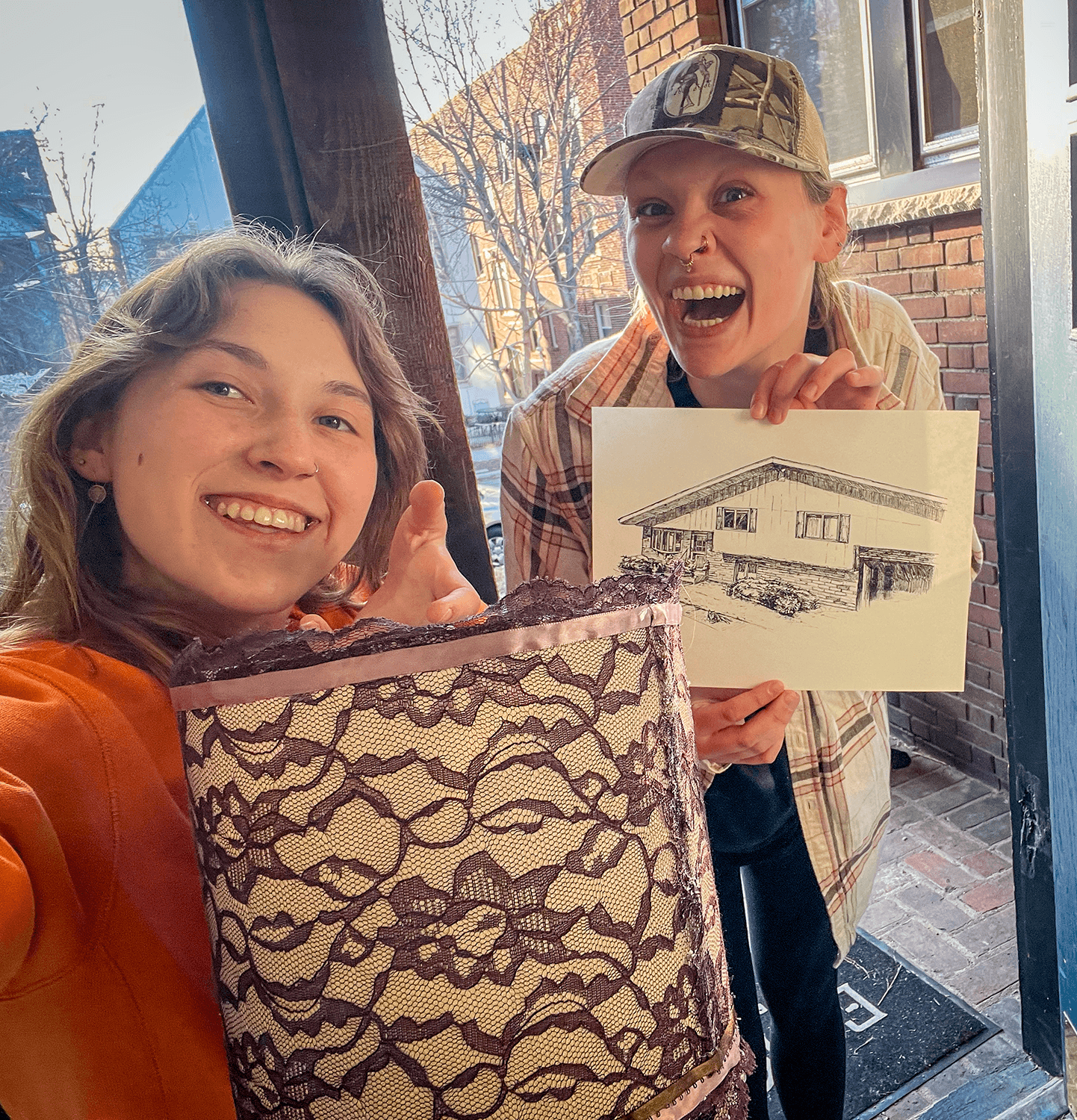
Pete: Here’s Anna’s advice if you want to host your own Barter Hour.
Anna: Just host it at your house. Invite as many people as possible. Give them the structure. A good host gives rules! You need rules. People love rules, and they know how to show up. It makes it more fun. I think that’s kind of the flaw of a lot of gatherings: There isn’t really a host and there isn’t really an expectation going in. And when there’s an expectation, you get so much more out of it. I learned that from a book that’s very in right now — The Art of Gathering.
Rebecca: And Anna’s pro-nagging.
Anna: Especially when people don’t respond — you kind of want to know how many people are going to be there so you can know how many name tags to make, how to split up the groups, and the numbers of drinks — it can feel so bad to follow up with someone and be like, “Hey, are you planning on coming? Hope to see you there.” You feel like a nag. But I think it’s important — especially because people have trouble with commitment in our society today. If you follow up, you’re going to get more of a response.
Rebecca: Anna’s also big on intentionality.
Anna: If you’re going to replicate this, I really do encourage you to set a time where people arrive — like, “arrive at six, bartering begins at six thirty” — rather than: Hey, come to Barter Hour, here’s an open room for trading from six to eight. I did that for two events and it just didn’t have the same sparkle and magic energy. It felt more passive. It just lacked this intentionality. And I’m a huge proponent of intentionality.
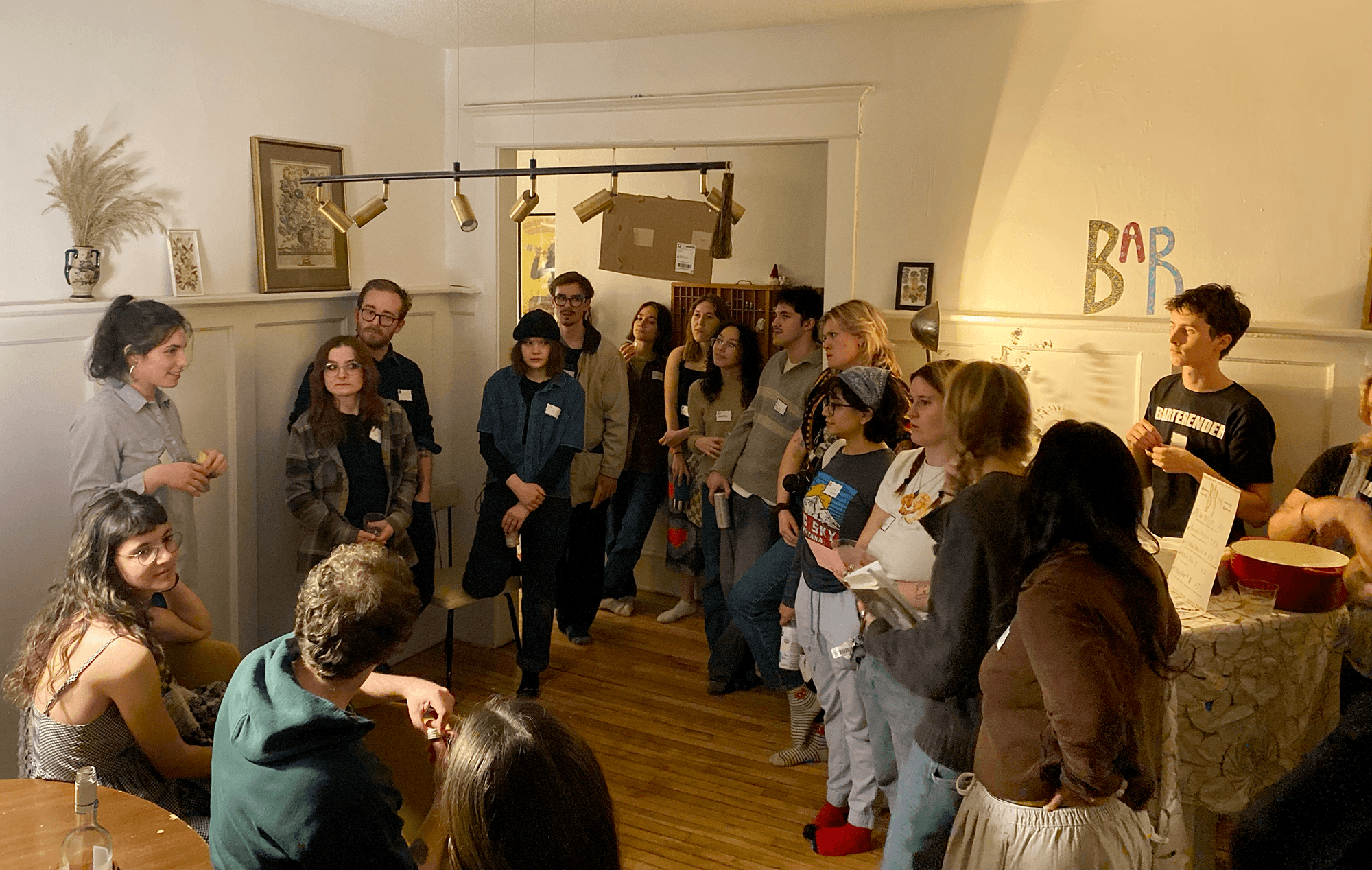
Pete: Barter Hour was built on a wonderful offer — that Anna’s community enthusiastically accepted.
Anna: I saw the gap: People need connection. People need structure. People need to be inspired. And people have skills and things they’re good at and they don’t realize that they could actually put them into the world. You don’t have to do it in a job or get paid for it. If you’re passionate about it, literally putting it out into the world and doing it for someone will fill your cup — and then fill their cup. That’s the world that I want to see: people realizing their gifts and their skills and then doing it without needing permission.
I just want more people to tap into that. Because I feel like that’s what I was able to do with Barter Hour. I was like: This is something I’m passionate about, so I’m going to make it happen. And if everyone could have that thought process, I think we would just have such a more exciting, interconnected city.
🍿 Bring JOIN OR DIE to your community
Want to host a JOIN OR DIE screening with your community? Let us know using the button below and we’ll get in touch with more information about how to host:
We’ve got merch!
Check out our Join Up! tees here.